
Exhibition of different species
July 2026 – Sea, Freshwater and Land Turtles: How to Tell Them Apart and What to Do
Finding a turtle on a beach, in a wetland, on a road or in any other natural area can raise questions about how we should act. The shape of its legs, the appearance of its shell and the place where it is found can help us determine whether it is a sea turtle, a freshwater turtle or a land tortoise.
Acting incorrectly — for example, moving it, putting it into the water or taking it home — can endanger the animal and harm the ecosystem. At ProDunas Marbella Association, we offer some basic guidelines to help identify them and understand what to do in each case.
1. Sea turtles
Sea turtles live in the ocean, and females only come ashore to lay their eggs on beaches.
Their limbs are shaped like flippers, their shells are flatter than those of land tortoises, and they are unable to fully retract their heads and limbs into their shells.
The species most commonly found along our coasts is the loggerhead sea turtle (Caretta caretta). We should also mention the leatherback sea turtle (Dermochelys coriacea), the largest sea turtle in the world, which can reach almost two metres in length and weigh more than 500 kilograms. The leatherback differs from other species because it does not have a hard shell made up of rigid plates. Instead, its body is covered by thick, flexible skin and has a streamlined shape that allows it to travel great distances across the ocean.
The hawksbill sea turtle (Eretmochelys imbricata) may also be mentioned. It is a mainly tropical species, easily recognised by its distinctive curved beak and the overlapping plates of its shell. Its presence along the Spanish coast is extremely rare and sightings in the Mediterranean are considered exceptional, making any observation particularly unusual.
What should we do?
If we find a sea turtle stranded, injured or apparently dead, we should call 112 immediately.
We should not touch it, return it to the sea or pull it by its flippers. It is also important to keep dogs and people away from the animal.
If the turtle is moving across the beach, it may be a female looking for a suitable place to lay her eggs. In this case, we should keep our distance, avoid lights, camera flashes and noise, and always follow the instructions given by the emergency services.
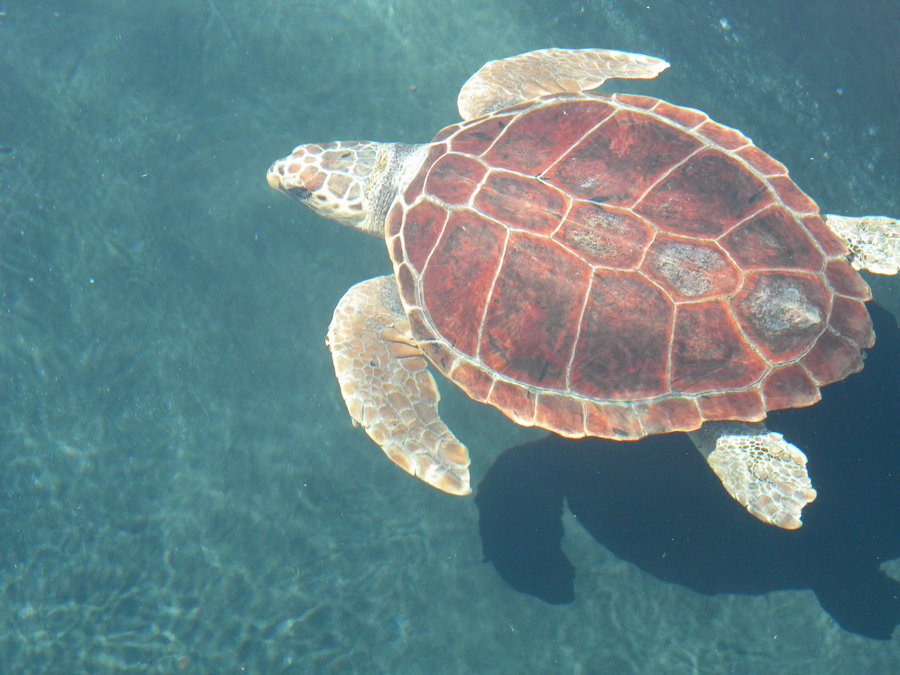
Loggerhead sea turtle (Caretta caretta)
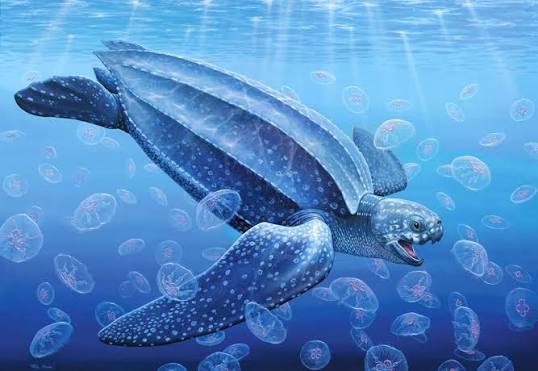
Leatherback sea turtle (Dermochelys coriacea)
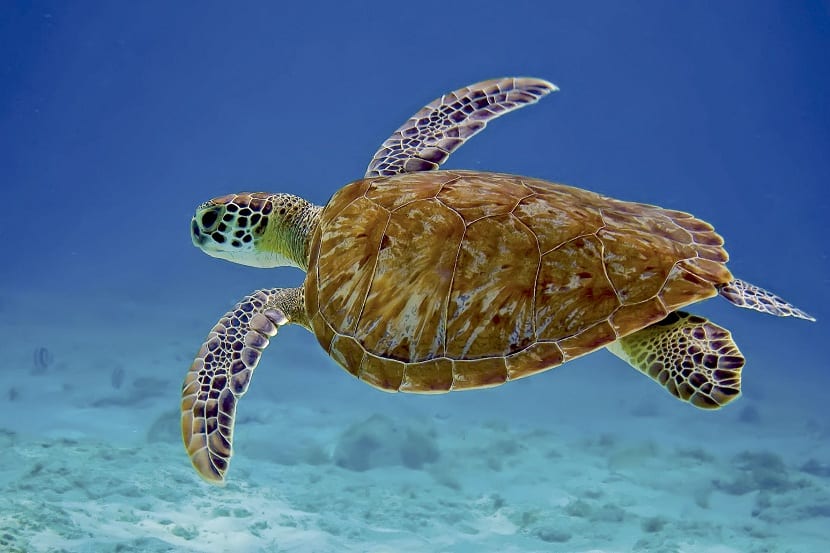
Hawksbill sea turtle (Eretmochelys imbricata)
2. Freshwater turtles
Freshwater turtles live in rivers, lagoons, ponds, reservoirs and wetlands. Their feet have toes, claws and webbing between the toes, allowing them to swim and move through muddy areas.
In Spain, it is important to distinguish between native species and introduced exotic species.
Among our native freshwater turtles are:
-
The Mediterranean pond turtle (Mauremys leprosa).
-
The European pond turtle (Emys orbicularis).
These species are part of our native wildlife and should not be captured, moved or kept as pets. If we find a healthy individual in its natural habitat, the correct thing to do is leave it where it is.
Among the exotic species, the best known is the pond slider (Trachemys scripta), many individuals of which originate from the pet trade. Some specimens have red, yellow or orange markings on the sides of the head.
When these turtles are abandoned in rivers, ponds or wetlands, they can compete with native species for food, space and basking areas.
What should we do?
We should never release a pet turtle into the wild or move a freshwater turtle from one wetland to another.
If the animal is injured, is in danger or we suspect that it may be an exotic species, we should report it to the environmental authorities, SEPRONA or call 112.
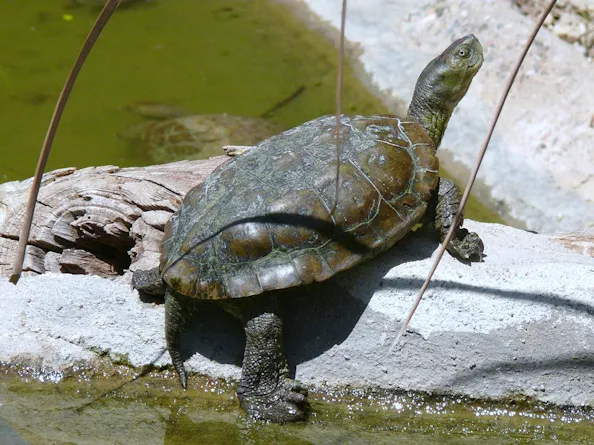
Mediterranean pond turtle (Mauremys leprosa)
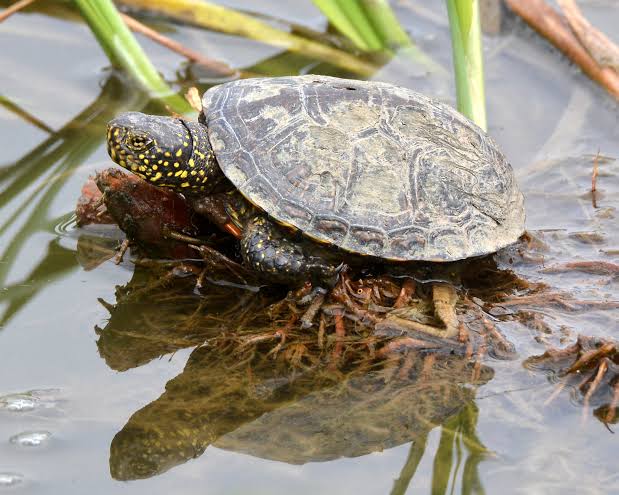
European pond turtle (Emys orbicularis)
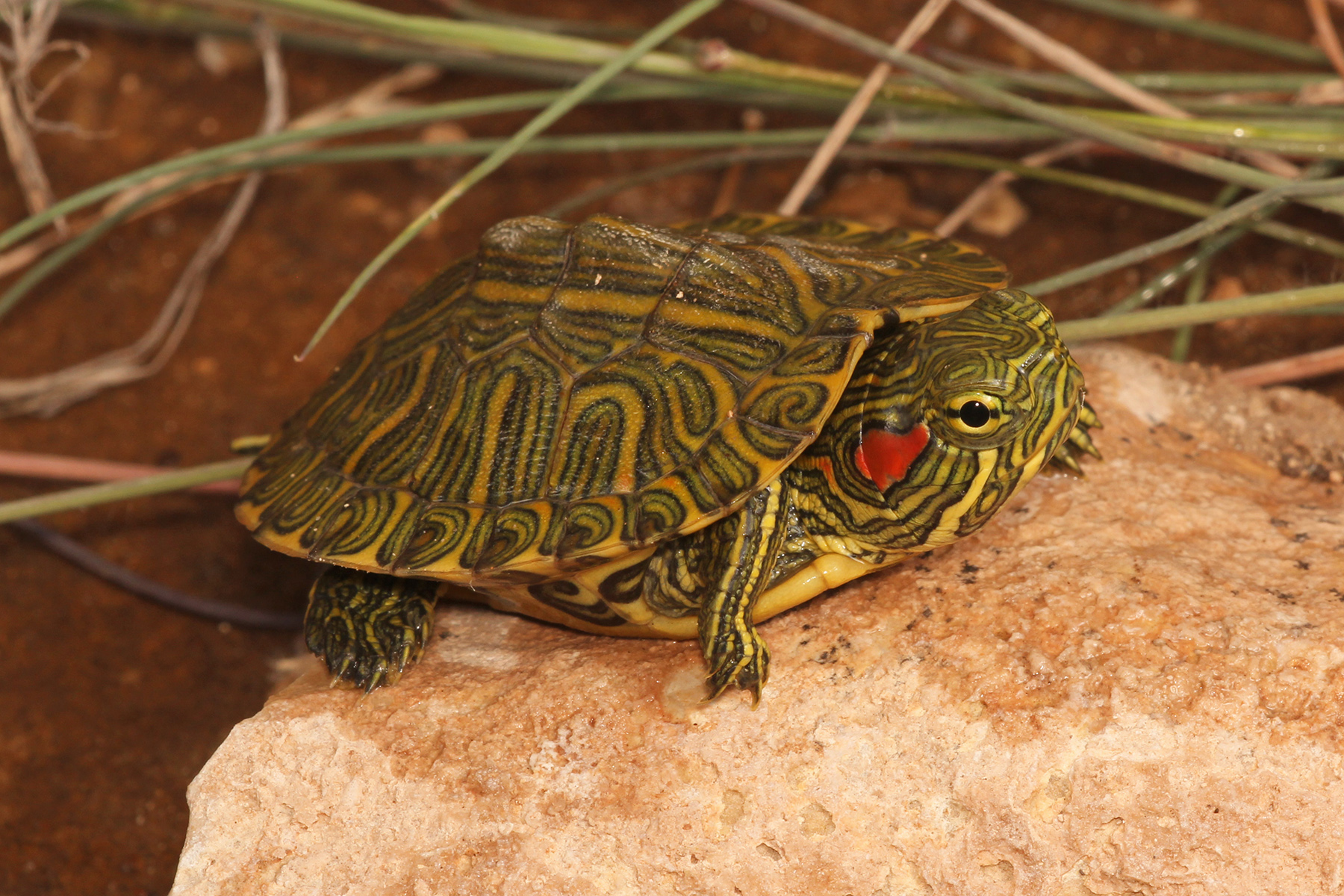
Pond slider (Trachemys scripta)
3. Land tortoises
Land tortoises are adapted to living on dry land. They have strong, cylindrical legs, claws suited for walking and digging, and a high, domed shell.
Unlike sea turtles and freshwater turtles, they are not adapted for swimming. For this reason, we should never place them in the sea, a swimming pool, a river or a pond.
Species found in Spain include:
-
The spur-thighed tortoise (Testudo graeca).
-
Hermann’s tortoise (Testudo hermanni).
Both are protected species and should never be taken home or moved to another natural area.
If a land tortoise is crossing a road and is in immediate danger, we can carefully move it to the side it was heading towards. If it is injured or in an unsafe area, we should call 112.
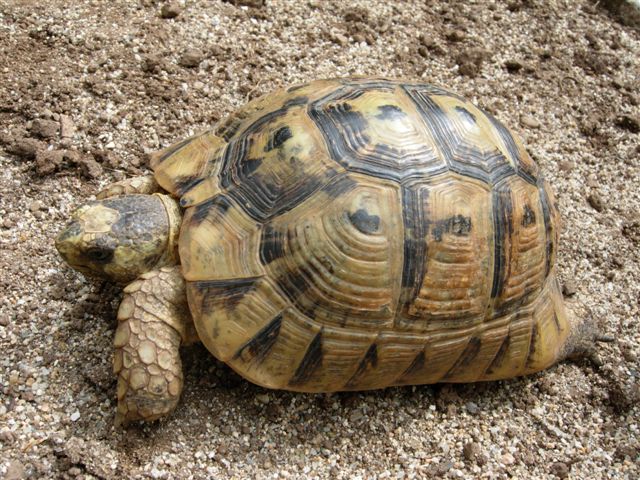
Spur-thighed tortoise (Testudo graeca)
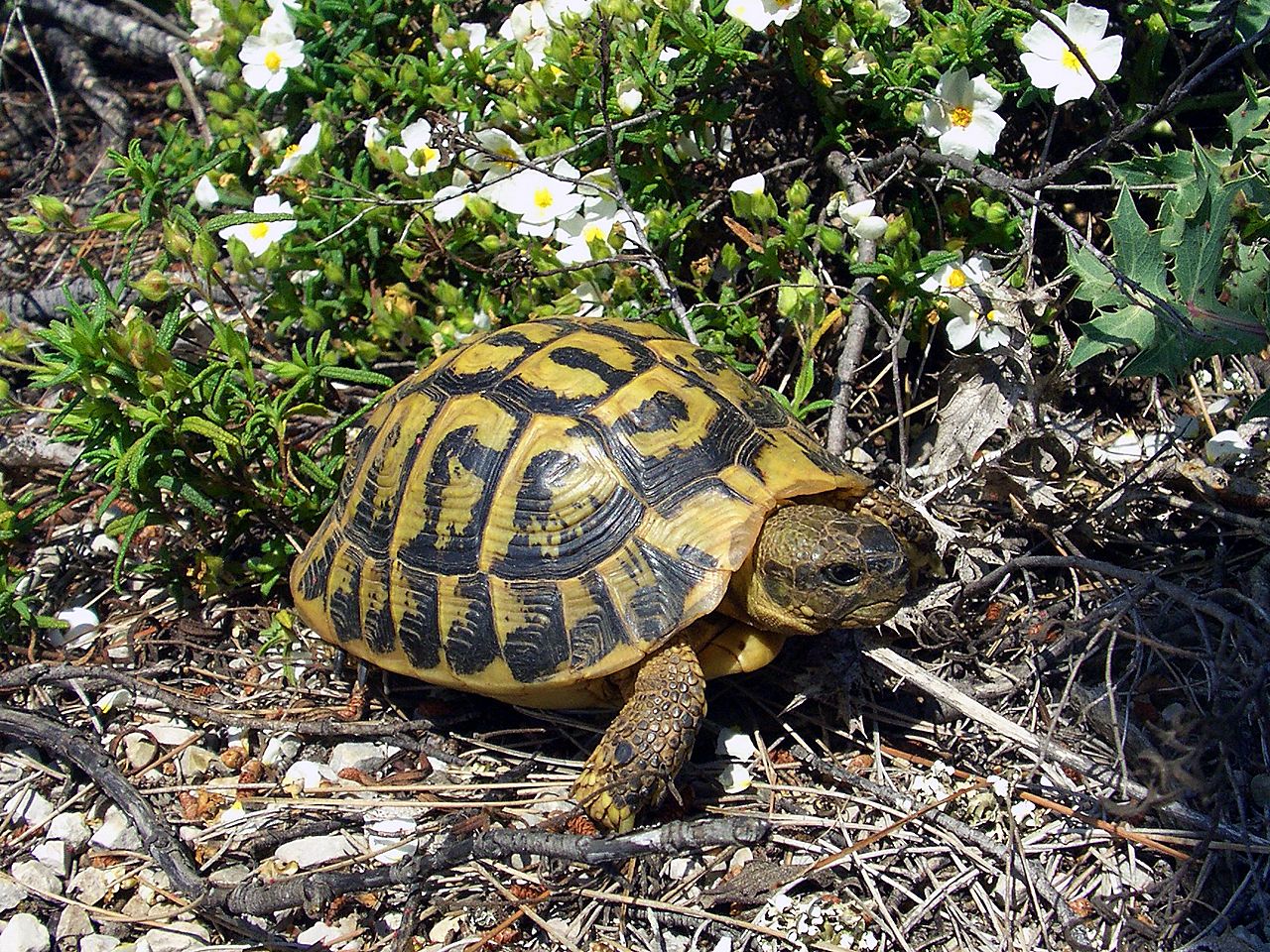
Hermann’s tortoise (Testudo hermanni)
4. Exotic species and animals subject to regulated ownership
Some exotic turtles can grow to a very large size and may react defensively when they feel threatened. For this reason, we should never touch or attempt to capture an unfamiliar turtle.
One example is the alligator snapping turtle (Macrochelys temminckii), a freshwater species native to North America. It has a very large head, a powerful beak and extremely strong jaws capable of causing serious injuries, including the amputation of a finger.
Although it is not a species native to our ecosystems, it could appear as a result of irresponsible ownership or the abandonment of exotic animals. If we encounter a turtle of this kind, we should keep our distance, keep children and pets away, and contact 112 or SEPRONA.
We should never release an exotic turtle into the natural environment. In addition to putting the animal itself at risk, it can cause serious harm to native species and disrupt the balance of the ecosystem.
Responsible action can save their lives
Whenever we encounter a turtle, the main rule is to observe without intervening unnecessarily.
We should not take it home, move it to another location, place it in the water or release pet turtles into the wild.
If the turtle is injured, stranded, in danger or belongs to an unfamiliar species, the most responsible course of action is to keep our distance and notify the relevant authorities.
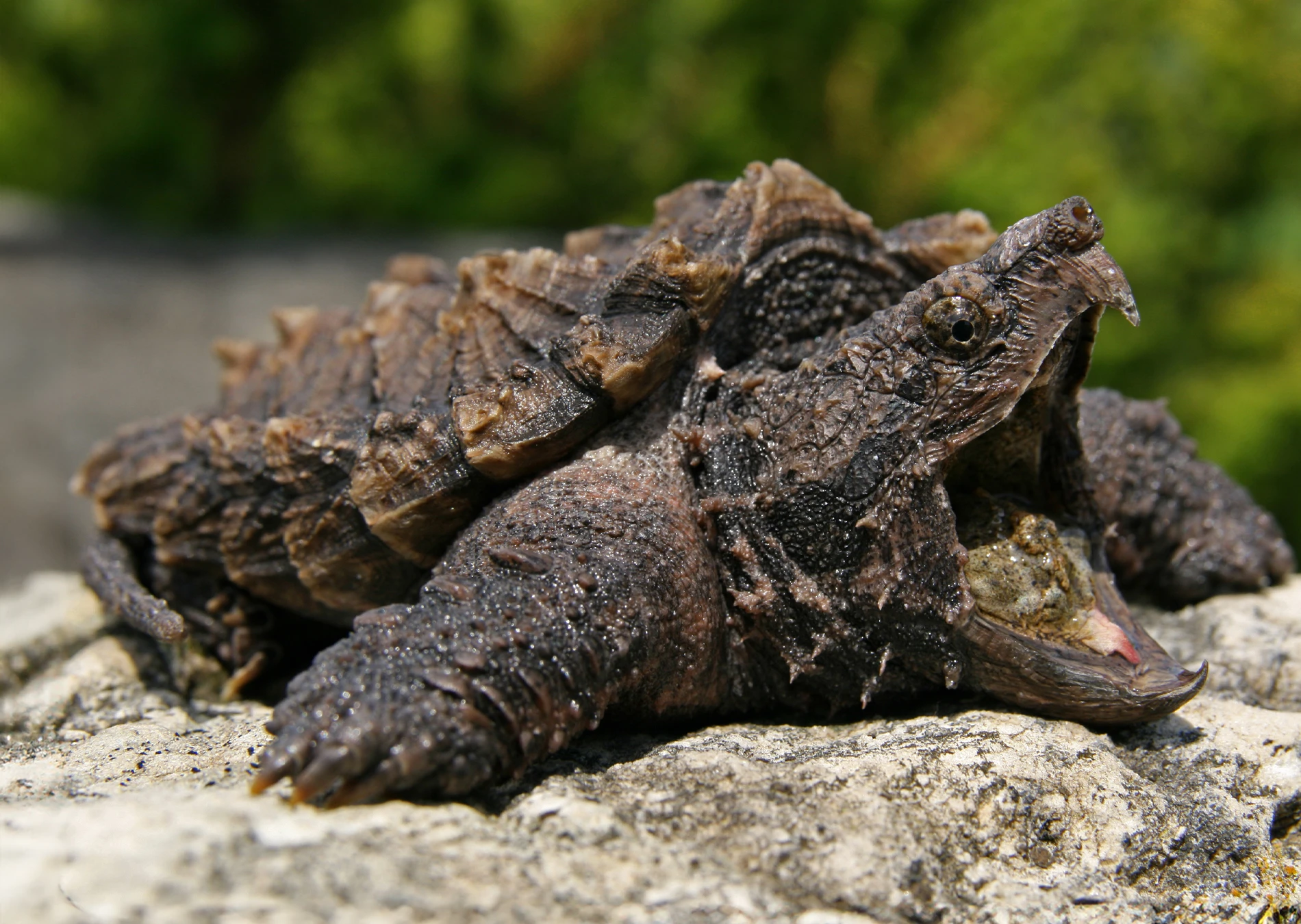
Alligator snapping turtle
(Macrochelys temminckii)
Do you want to receive our Newsletter?
Do you want to become a member or be our friend of the dunes?
Asociación ProDunas Marbella
The Association works tirelessly for the defence and preservation of the unique ecosystems that survive in the natural sand dune environments in the Province of Málaga; promotes the protection of native flora and small wildlife; promotes recovery, rehabilitation and conservation of interesting biodiversity of sand dunes areas in the municipality of Marbella.